
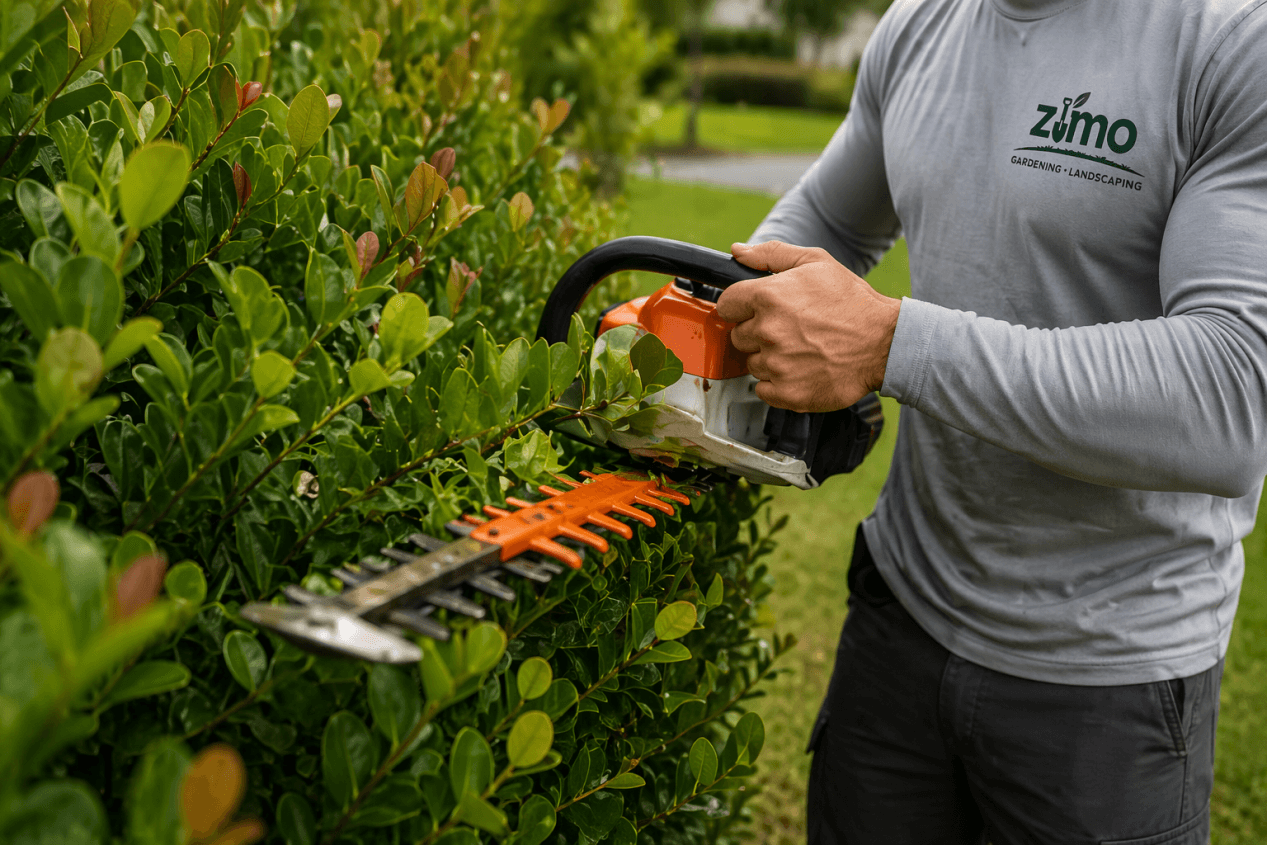
How Often Should a Hedge Be Trimmed?
Finding the right rhythm, not just a fixed schedule
It’s Not Just About Frequency
One of the most common questions in garden maintenance is:
How often should a hedge be trimmed?
The answer is rarely a fixed number.
Because hedge care is not just about how often it is cut — but how well its growth is managed over time.
A hedge that is trimmed at the right intervals feels consistent.
One that isn’t quickly becomes uneven, dense, or difficult to control.
Why Timing Matters More Than a Schedule
Many hedges are maintained reactively:
left to grow too far, then heavily reduced, followed by uneven regrowth
This creates a cycle where:
structure is lost, density becomes inconsistent, more aggressive cuts are needed later
A refined approach focuses on timing — adjusting before the shape is lost.
A Practical Guideline
While every hedge is different, a general rhythm works well for most structured gardens:
light trimming every 6–10 weeks during active growth
less frequent adjustments in slower seasons
occasional shaping to reset the overall form
This keeps the hedge: consistent in height, controlled in width, dense and healthy over time.
What Happens If It’s Done Too Infrequently
When trimming is delayed:
the hedge grows beyond its intended line, cuts become deeper and more visible, regrowth can appear patchy, the overall structure softens.
What could have been a simple adjustment turns into a more intensive correction.
What Happens If It’s Done Well
With consistent, well-timed trimming:
the line stays clean, growth remains controlled, the hedge becomes easier to maintain, the garden always feels “ready”.
The work itself becomes lighter —because the structure is never lost.
A Simple Principle:
Trim to maintain, not to recover.
This is what keeps a hedge looking effortless.
Why This Matters in High-End Gardens
In premium residential settings, hedges are rarely just background planting.
They act as:
structure
boundary
visual anchor
If the hedge loses its shape, the entire garden feels less resolved.
Consistent trimming ensures the space holds its standard over time — not just occasionally.
The Takeaway
There is no single schedule that suits every hedge.
But there is always a rhythm.
And finding that rhythm is what keeps a garden feeling composed.
Thinking About a More Consistent Approach?
If your hedge feels like it’s constantly getting ahead of itself, it may not need more cutting — just better timing.
A regular, structured approach usually delivers the best result.